
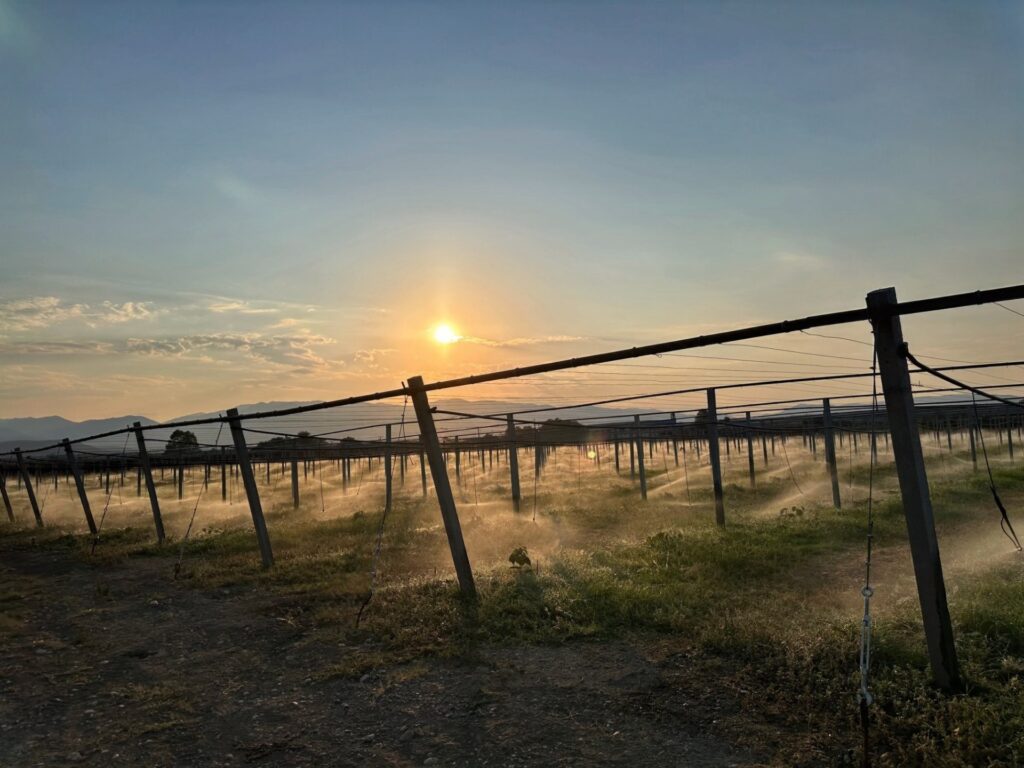
Growing premium kiwis is more than just patience and manual labor – it requires precision, technology, and knowledge of every single plant. One crucial factor for the quality, flavor, and shelf life of our fruits is irrigation.
💧 Why Irrigation Is So Important
Kiwis have deep roots and require a consistent water supply. Too little water leads to small fruits and low sugar levels, while too much water causes disease and poor storability.
👉 That’s why: The right balance is key.
⚙️ Our System – Precision Drip Irrigation
On our plantations in Pieria, at the foot of Mount Olympus, covering more than 110,000 m², we rely on state-of-the-art drip irrigation systems.
- Drip lines run along each plant row.
- Each tree receives water precisely – right at the roots.
- Sensors and measuring devices monitor soil moisture and pressure.
The result: Not a single drop is wasted – water is used efficiently.
📏 How Often and How Much Is Watered?
- In hot summer months: Daily for 2–3 hours, depending on the weather.
- Spring & autumn: Every 2–3 days, adjusted based on rainfall.
- Winter: Minimal watering to keep soil evenly moist.
This control keeps the plant in perfect balance – enough water for growth, but never too much, so the fruit remains strong and suitable for storage.
🌍 Sustainability – Our Commitment
We use groundwater from the region, fed by the meltwater of Mount Olympus. This water is particularly rich in minerals and purity, directly impacting the quality of our fruits.
To conserve resources:
- Filtration systems clean the water before it enters the lines.
- Pressure regulators ensure a consistent flow, even with varying terrain.
- We combine irrigation with fertilization (fertigation), delivering nutrients exactly where they’re needed – at the roots.
✅ Conclusion: Technology Meets Nature
Proper irrigation is the heart of our work.
It allows us to deliver premium kiwis year after year in consistent quality – juicy, sweet, and strong enough for the long journey to Germany.
Our mission is clear: With sustainable systems and true dedication, we show that Greek fruits not only compete internationally – they set new standards.





 English
  German